


What does “hypoallergenic dog” actually mean?
No dog is 100% hypoallergenic. That’s the short answer, and it comes straight from both the American Kennel Club and the American Academy of Allergy, Asthma & Immunology. The term “hypoallergenic” simply means a lower likelihood of triggering an allergic reaction. Applied to dogs, it generally describes breeds that shed less, which can reduce how much dander and hair circulates through your home. It does not mean allergen-free.
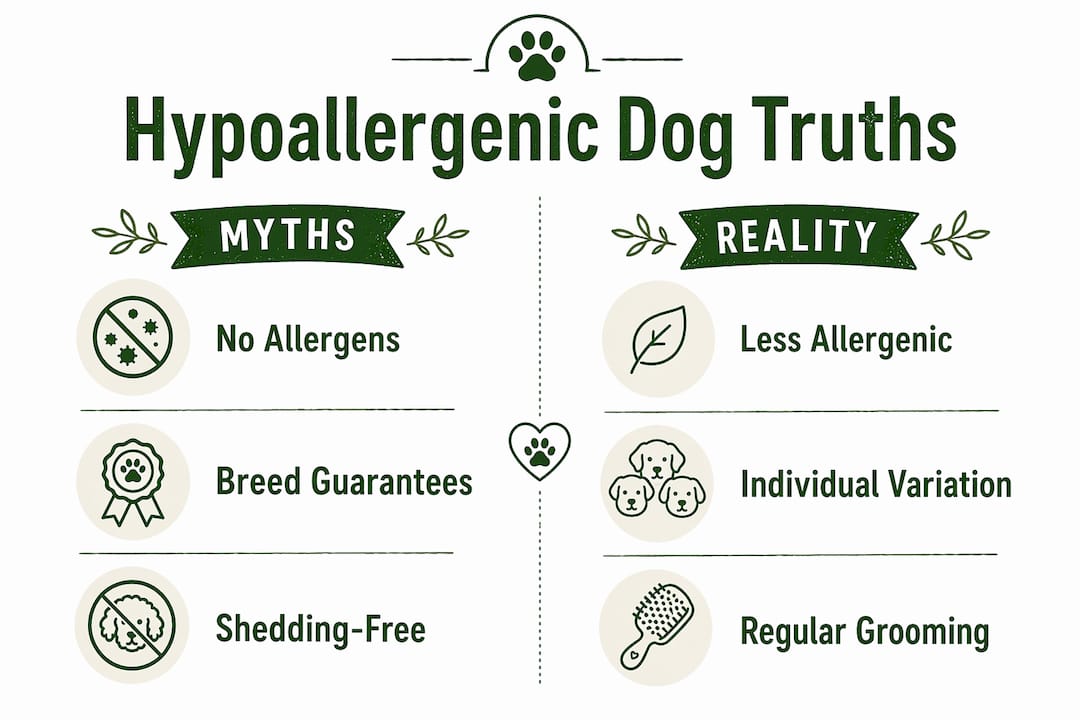
Every dog produces allergenic proteins regardless of coat type. These proteins, known as Can f 1 through Can f 6, come from a dog’s saliva, skin dander, urine, and sebaceous secretions. They become airborne, settle on furniture, and cling to clothing. Between 10% and 20% of the U.S. population is allergic to dogs, according to the National Institutes of Health, so the stakes of misunderstanding this term are real.
Here is what the label actually signals:
- Less shedding, which means less dander spread through the air and on surfaces
- A more predictable coat type, particularly in purebred dogs
- No guarantee of reduced allergen production at the source
- No regulated or scientific definition behind the word “hypoallergenic” as applied to dog breeds
Why do dogs cause allergic reactions?
Dog allergies are not caused by fur itself. The real culprits are proteins, specifically the Can f allergen family, produced in a dog’s body and released into the environment constantly.
- Can f 1: Produced in the tongue; found in dander, hair, and saliva
- Can f 2: From the tongue and salivary glands
- Can f 3: A serum albumin from the dog’s blood
- Can f 4 and Can f 6: Found in skin, saliva, and urine
- Can f 5: Produced exclusively in the prostate of intact male dogs; present in urine and saliva
Can f 5 is particularly worth knowing about. Because only unneutered males produce it, people who are sensitive solely to Can f 5 may tolerate female dogs or neutered males without any symptoms at all. An allergist can test for sensitivity to specific allergens, which changes the conversation from “what breed?” to “which individual dog?”
Shedding accelerates allergen dispersal. When a dog sheds, dander-coated hair lands on carpets, upholstery, and bedding, where it can remain for months. Low-shedding breeds slow that process down but do not stop it.

The myths about hypoallergenic breeds don’t hold up to science

The idea that certain breeds are safe for allergy sufferers is largely a marketing claim, not a scientific one; for more details, see Qué significa hipoalergénico en alimentos para mascotas. Research shows no consistent difference in allergen levels between homes with so-called hypoallergenic dogs and homes with other breeds. A published study found that airborne allergen concentrations were similar across both groups, and in some cases, hair and coat samples from “hypoallergenic” breeds actually contained higher levels of Can f 1.
A few specific myths worth addressing directly:
- “Hypoallergenic breeds produce fewer allergens.” False. Allergen production happens at the biological level, in glands and saliva, not in the coat.
- “A breed that works for one person will work for everyone.” Also false. Individual immune sensitivity varies widely. A dog that causes no reaction in one person can trigger significant symptoms in another, even within the same litter.
- “Labradoodles are safe for allergy sufferers.” The AAAAI specifically notes that homes with popular breeds like Labradoodles showed no meaningful reduction in environmental allergen burden.
The honest framing is “less allergenic,” not “hypoallergenic.” Breeds with low-shedding coats, like Poodles, Bichon Frisés, and doodle crosses, reduce allergen dispersal. They do not eliminate the proteins that cause reactions.
Practical ways to reduce allergic reactions when living with a dog
Managing dog allergies is about layering strategies, not finding a magic breed. These approaches, used together, make a real difference.
- Bathe your dog regularly. Frequent washing can temporarily lower allergen levels, but the effect fades within 2–3 days as Can f 1 returns to baseline. Use a moisturizing shampoo to protect the dog’s skin from the drying effects of frequent baths. Lakewoodranchdoodles recommends an oatmeal-based shampoo for this reason.
- Groom consistently. Regular brushing and professional grooming reduce loose dander and coat buildup, especially for curly or wavy-coated breeds.
- Run HEPA air filters. High-efficiency particulate air filters capture airborne allergens and are one of the most effective environmental controls available.
- Keep the dog out of bedrooms. You spend 7–8 hours a night in that space. Keeping it allergen-reduced gives your immune system a genuine rest.
- Wash bedding and soft furnishings frequently. Allergens settle into fabric and accumulate fast.
- See an allergist. Skin or blood tests can identify exactly which Can f proteins trigger your reactions. That information shapes every other decision, from which dog to consider to whether immunotherapy makes sense for you.
- Consider immunotherapy. Allergy shots and sublingual drops can reduce sensitivity over time, making dog ownership genuinely manageable for many people.
For allergy-prone households, the Goldendoodle allergy-friendly home tips from Lakewoodranchdoodles offer practical room-by-room guidance worth reading before you bring any dog home.
What 20+ years of breeding experience teaches about allergies and dogs
At Lakewoodranchdoodles, over two decades of raising Goldendoodles, Bernadoodles, and Cockapoos has made one thing clear: allergen levels vary not just by breed, but by individual dog, by generation, and even within the same litter. Two puppies from the same parents can affect the same person very differently.
- Multigenerational doodle crosses, particularly F1b and F2 generations, tend to have curlier, lower-shedding coats that reduce dander dispersal in the home.
- Female dogs and neutered males do not produce Can f 5, which matters significantly for people sensitive to that specific allergen. Lakewoodranchdoodles’s Goldendoodle females are a natural starting point for families with that sensitivity.
- Grooming frequency, diet, and overall skin health all influence how much dander a dog produces day to day.
- No breeder can guarantee a dog will be tolerated by a specific person. What a good breeder can do is give you the information and access to make an informed test before you commit.
Pro Tip: Before adopting any dog, spend extended time with that specific animal, not just the breed in general. Visit more than once, over multiple days if possible. Reactions often build with repeated exposure, so a single short visit can give a false sense of security. An allergist visit beforehand, to identify your specific Can f sensitivities, makes that test far more meaningful.
The goal at Lakewoodranchdoodles has always been to match families with dogs that genuinely fit their lives, including their health needs. Their breeding program is built around health, temperament, and long-term support, not just placement.
If you’re ready to explore less-allergenic breeds with a breeder who will walk you through every step, start with the Goldendoodle puppies available at Lakewoodranchdoodles, or reach out directly at 705 875 5195 to book a visit or virtual consultation.
Key Takeaways
No dog is allergen-free, but choosing a low-shedding breed, testing your specific sensitivities, and layering environmental controls gives allergy sufferers a real path to dog ownership.
| Point | Details |
|---|---|
| No dog is 100% hypoallergenic | All dogs produce Can f allergens in saliva, dander, and urine regardless of breed or coat type. |
| A notable proportion of Americans are allergic to dogs | That figure comes from the National Institutes of Health, cited by the American Kennel Club. |
| Can f 5 is male-specific | Only intact male dogs produce Can f 5; female or neutered male dogs may be tolerated by people sensitive to this allergen alone. |
| Bathing reduces allergens briefly | Allergen levels return to baseline within 2–3 days after washing, so grooming must be frequent and consistent. |
| Test the individual dog, not the breed | Allergen levels vary within litters; extended direct exposure before adopting is the most reliable compatibility test. |