


Doodle grooming is a medical necessity, not a cosmetic preference. Goldendoodles, Bernadoodles, and Cockapoos carry hybrid coats that grow continuously, mat rapidly, and trap moisture against the skin in ways that cause real pain and infection. Why doodle grooming matters becomes clear the moment you understand that a neglected coat can restrict movement, hide parasites, and lead to veterinary bills that dwarf the cost of a regular grooming schedule. The good news is that a consistent routine at home and with a professional groomer keeps your dog comfortable, healthy, and genuinely happy to be touched.
Why doodle grooming matters: the coat is more complex than it looks
Doodle coats are a hybrid of two very different coat types, typically the dense, curly coat of a Poodle and the softer, shedding coat of a Golden Retriever, Bernese Mountain Dog, or Cocker Spaniel. The result is a coat that grows without stopping, rarely sheds loose hair to the floor, and instead traps that loose hair inside the coat itself. That trapped hair is the root cause of matting.
The coat type you get depends heavily on generation. An F1b doodle, which is 75% Poodle, typically carries a tighter curl that mats faster than an F1 wavy coat. Both require frequent care, but the curly coat demands more brushing time and shorter intervals between professional appointments.
The puppy-to-adult coat transition, which happens between 8 and 14 months of age, is the single most dangerous grooming window for new owners. The adult coat pushes out the puppy coat, creating dense tangles near the skin that form almost overnight. Many owners are caught off guard because the puppy coat looked easy to manage. The adult coat is a completely different challenge.
High-friction zones mat the fastest. These include:
- Armpits and groin: Constant leg movement creates friction that binds hair into tight knots within days.
- Behind the ears: Collar rubbing and head shaking accelerate mat formation here.
- Collar line: Any area where a collar or harness sits will mat quickly without daily attention.
- Belly and inner legs: These spots are easy to miss during a quick brush session.
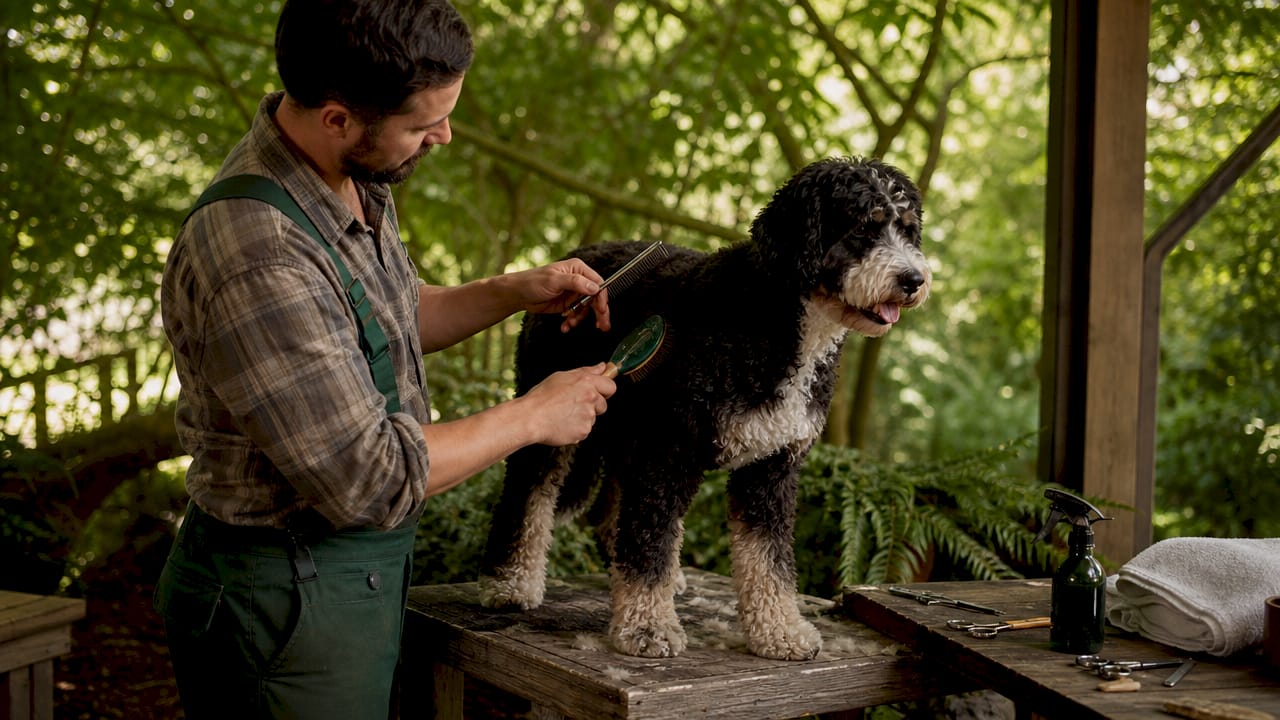
Pro Tip: Use a steel comb, not just a slicker brush, to do a final pass after brushing. If the comb glides from skin to tip without catching, the coat is truly mat-free. If it snags, you have a mat forming near the skin that the brush missed.
How does regular grooming benefit a doodle’s health and behavior?
Grooming prevents painful matting that causes skin infections and restricted movement. A mat is not just an aesthetic problem. Tight mats pull constantly on the skin, causing chronic low-grade pain. They also trap moisture and bacteria, creating the warm, dark environment that skin infections need to thrive. Neglecting grooming leads to dense mats that cause skin irritation, infection, and expensive veterinary care, often resulting in full shave-downs that stress both dog and owner.
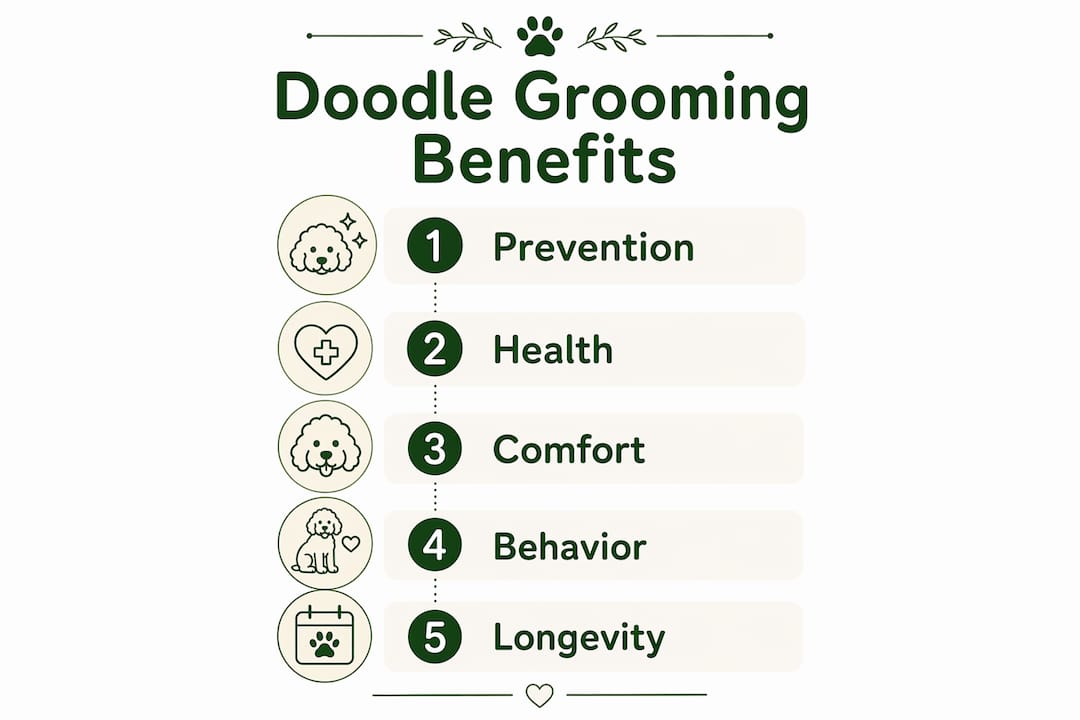
Regular brushing helps identify lumps, parasites, and skin changes before they become serious problems. Running your hands and a comb through your dog’s coat three to five times a week means you will notice a tick, a new lump, or a hot spot days before it would otherwise come to your attention. Early detection saves money and, in some cases, saves lives.
Grooming also shapes behavior. Dogs that are handled regularly from puppyhood learn that touching, lifting paws, and examining ears is normal. That comfort with handling makes veterinary visits less stressful and reduces the risk of fear-based reactions during grooming appointments.
“Grooming is not just aesthetic but an important health check and bonding routine that benefits the dog’s comfort and the owner’s ability to monitor health.” Regular sessions build the kind of trust that makes your dog genuinely relaxed in your hands.
The behavioral benefits extend beyond the grooming table. Dogs that are not in chronic pain from matting are calmer, more playful, and more willing to engage. The connection between physical comfort and emotional well-being in dogs is direct and measurable. A well-groomed doodle is simply a happier dog.
What practical grooming routines actually work for doodle owners?
A realistic home grooming routine is the foundation of coat health between professional appointments. Here is what works:
- Brush at least 3–5 times per week. Some curly coats require daily 15-minute brushing sessions to stay mat-free. Wavy coats can sometimes get by with every other day, but daily is always safer during the coat transition period.
- Use the line brushing technique. Line brushing involves parting the coat and brushing from the skin outward in layers. Brushing only the top layer of the coat leaves mats hidden near the skin where they cause the most damage.
- Always pre-brush before bathing. Bathing a matted coat tightens the mats and makes them nearly impossible to remove without cutting. Brush thoroughly before the dog gets wet.
- Use coat-appropriate shampoo and conditioner. High-quality shampoos and conditioners formulated for doodle coats improve coat health and make brushing easier between baths. A gentle oatmeal dog shampoo works well for sensitive doodle skin.
- Dry thoroughly after every bath. Proper drying is essential to prevent matting post-bath and to achieve a coat that stays manageable between appointments. A high-velocity dryer speeds the process and straightens the coat for easier brushing.
- Book professional grooming every 4–8 weeks. Most doodles require professional grooming every 4 to 8 weeks to prevent matting. Dogs in the puppy-to-adult coat transition or with dense curls often need 4-week visits.
Pro Tip: Ask your groomer to show you exactly where your dog’s problem zones are after each appointment. A good groomer will point out the spots that were closest to matting so you can prioritize those areas at home.
The tools that matter most are a quality slicker brush, a steel comb with both wide and narrow tines, and a detangling spray for stubborn areas. Avoid de-shedding tools like the Furminator on doodle coats. Those tools are designed for double-coated shedding breeds and will damage the doodle’s single, continuously growing coat.
What are the biggest misconceptions about doodle grooming?
The most damaging myth in doodle ownership is that low shedding equals low maintenance. Marketing myths present doodles as low-maintenance, but their complex, continuously growing coats require frequent care to avoid coat pain. The reality is the opposite of the myth. Because doodles do not shed loose hair to the floor, that hair stays in the coat and mats. A heavy-shedding Labrador actually requires less brushing than most doodles.
Common misconceptions that cost owners money and their dogs comfort include:
- “My doodle’s coat looks fine, so it must be fine.” Surface appearance is misleading. Mats form near the skin, invisible under a fluffy topcoat, until they are severe enough to cause pain.
- “I can skip grooming appointments to save money.” Skipping professional grooming leads to expensive dematting or full shave-downs that cost far more than regular appointments and cause significant stress for the dog.
- “Any groomer can handle a doodle.” Doodle coats require groomers with specific experience in hybrid coat types. A groomer unfamiliar with line brushing or doodle coat behavior can cause more harm than good.
- “Shorter hair means less work.” A short clip still requires regular brushing and professional maintenance. The coat grows back quickly and will mat just as fast if the home routine slips.
The financial math is straightforward. A regular 6-week grooming appointment costs a fraction of an emergency dematting session or a veterinary visit for a skin infection caused by a neglected mat. Consistent professional grooming at 4–6-week intervals is the more cost-effective path over the life of the dog.
Understanding why doodle care matters before you bring a puppy home is the single best thing you can do to set yourself and your dog up for success.
Key Takeaways
Consistent grooming is the most direct investment a doodle owner can make in their dog’s long-term health, comfort, and behavior.
| Point | Details |
|---|---|
| Grooming prevents real medical harm | Mats cause skin infections, chronic pain, and restricted movement, not just a bad appearance. |
| Coat transition is the highest-risk window | Between 8 and 14 months, daily brushing and more frequent professional visits are non-negotiable. |
| Line brushing is the correct technique | Brush from skin outward in layers; surface brushing leaves hidden mats that cause the most damage. |
| Professional grooming every 4–8 weeks | Curly coats and dogs in transition may need 4-week appointments to stay mat-free. |
| Low shedding does not mean low maintenance | Doodle coats trap loose hair inside, requiring more brushing than most shedding breeds. |
What 20 years of doodle breeding taught me about grooming
Owners often come to us after a rough experience with a shave-down, and the story is almost always the same. They were told their doodle was low-maintenance, they skipped a few brushing sessions, and then suddenly the groomer said the coat was too matted to save. That moment is genuinely traumatic for the dog and heartbreaking for the owner.
What I have learned over more than two decades of raising Goldendoodles, Bernadoodles, and Cockapoos is that grooming is a relationship. The dogs who are easiest to groom as adults are the ones whose owners started handling them from day one. Touching paws, ears, and bellies during play. Running a soft brush through the coat during cuddle time. Making the whole experience feel like affection rather than a procedure.
The coat transition period is where most owners hit a wall. The puppy coat was manageable, and then suddenly the adult coat arrives and nothing works the same way. My honest advice is to increase your grooming frequency before you see a problem, not after. Book that 4-week appointment during the transition even if the coat looks fine. It will not look fine two weeks later if you wait.
Grooming is also the best early warning system you have. I have had owners discover lumps, skin infections, and even embedded foxtails during a routine brush session. That kind of early detection is only possible if you are in the coat regularly. Think of brushing as a health check that happens to also keep your dog looking great.
— Lakewood
Lakewoodranchdoodles supports you from puppy day one
At Lakewoodranchdoodles, every puppy and adult dog for sale is raised with early handling, socialization, and coat care built into their daily routine from birth. That foundation makes the transition to your home, and to a grooming table, dramatically smoother. Our go-home packages include coat care guidance, and our lifetime breeder support means you can call or visit when the adult coat transition hits and you are not sure what to do next. Located in Lindsay, Ontario, we offer daily visits by appointment and virtual visits for families across Canada. Reach us at 705 875 5195 or submit an inquiry online to get started.
FAQ
How often should a doodle be professionally groomed?
Most doodles need professional grooming every 4 to 8 weeks. Dogs with tighter curls or those going through the puppy-to-adult coat transition often need 4-week appointments.
What is line brushing and why does it matter for doodles?
Line brushing means parting the coat and brushing from the skin outward in layers. It removes mats hidden near the skin that surface brushing completely misses.
Are doodles really low-maintenance dogs?
No. Doodles have complex, continuously growing coats that require more brushing than most shedding breeds because loose hair stays trapped in the coat instead of falling to the floor.
When is the hardest grooming period for a doodle?
The puppy-to-adult coat transition between 8 and 14 months is the most demanding period. The adult coat pushes out the puppy coat, creating dense tangles near the skin that require daily brushing and more frequent grooming visits.
What tools do doodle owners actually need at home?
A quality slicker brush and a steel comb with wide and narrow tines are the two non-negotiable tools. Avoid de-shedding combs designed for double-coated breeds, as they damage the doodle’s single, continuously growing coat.