


Proper doodle puppy socialization is defined as the process of teaching your puppy to respond calmly and confidently to other dogs during a narrow developmental window. The critical socialization window opens at 3 weeks and largely closes by 16 weeks of age, with the most intense learning happening between 8 and 16 weeks. Miss that window, and you are working against biology for the rest of your dog’s life. Canadian owners who want to socialize a doodle puppy with other dogs need a plan that balances early exposure with real health and safety considerations, including vaccination timing and choosing the right canine partners.
When and how to safely start socializing a doodle puppy with other dogs
Timing is the single most important factor in doodle puppy socialization. Start too late and the window closes. Start too early without health precautions and you risk disease exposure that can end a puppy’s life before it begins.
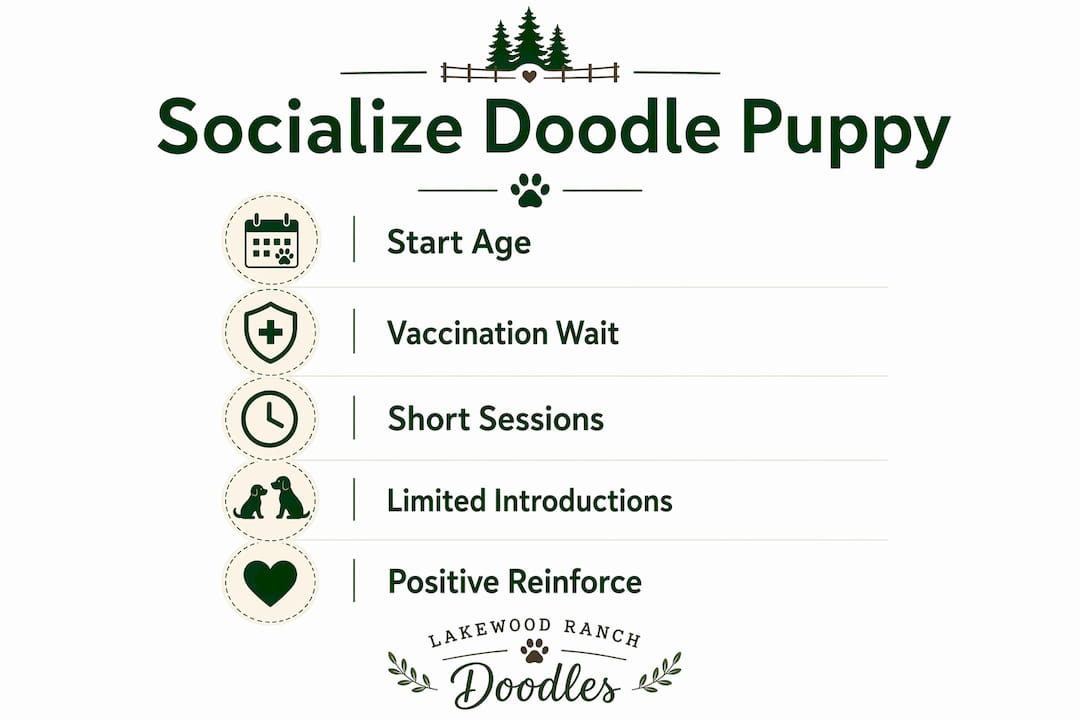
Puppies typically begin vaccinations no earlier than 6 weeks of age. Wait at least 7 days after the first vaccination round before any dog-to-dog contact. That means most Doodle puppies can begin carefully controlled socialization around 7 to 8 weeks, right as the prime learning window opens.
The key word is controlled. Not every dog-to-dog encounter counts as good socialization. The environment, the other dog’s temperament, and the length of the session all determine whether the experience builds confidence or creates fear.
Safe socialization before full vaccination looks like this:
- Private backyards with known, vaccinated dogs only
- Puppy classes that require proof of vaccination from all participants
- Visits with dogs owned by trusted friends or family members
- Avoiding dog parks, pet store entrances, and high-traffic dog areas entirely
Pro Tip: Ask your veterinarian in Canada about the specific vaccination schedule recommended in your region. Provincial guidelines can vary slightly, and your vet’s advice takes priority over any general timeline.
Socialization sessions should stay under 10 minutes and introduce no more than 1 to 5 new experiences per week. Short and positive beats long and chaotic every time.
How do you introduce a doodle puppy to other dogs step by step?
Introducing a doodle to dogs is not about throwing them together and hoping for the best. A structured approach produces dogs that greet calmly and play fairly. Follow these steps in order, and do not rush any of them.
-
Start with parallel walking. Parallel walking is the gold standard for first dog meetings. Walk both dogs side by side with a wide gap between them, moving in the same direction. This lets them observe each other without the pressure of a face-to-face greeting.
-
Gradually close the distance. Over several minutes, reduce the gap between the dogs as both remain relaxed. Watch for loose, wiggly body language on both sides before moving closer.
-
Allow a brief sniff greeting. The three-second rule limits initial greetings to three seconds of sniffing. Longer interactions risk over-arousal, pushy behavior, or fearful reactions. Call your puppy back with a treat after three seconds.
-
Reward calm behavior immediately. Use high-value treats the moment your Doodle checks in with you or disengages from the other dog calmly. This builds the habit of looking to you during dog interactions.
-
Repeat and build. Gradually increase the length and closeness of interactions across multiple sessions. Never push to the next level if either dog shows tension.
-
Keep the leash loose. A tight leash communicates stress to your puppy and restricts the natural body language dogs use to signal friendliness. Loose leash contact lets both dogs communicate honestly.
Handler energy matters as much as technique. Dogs are sensitive to human emotion and tension. A calm, steady voice and relaxed body language from you directly reduces your puppy’s stress during every greeting.
How do you read dog body language during puppy playdates?
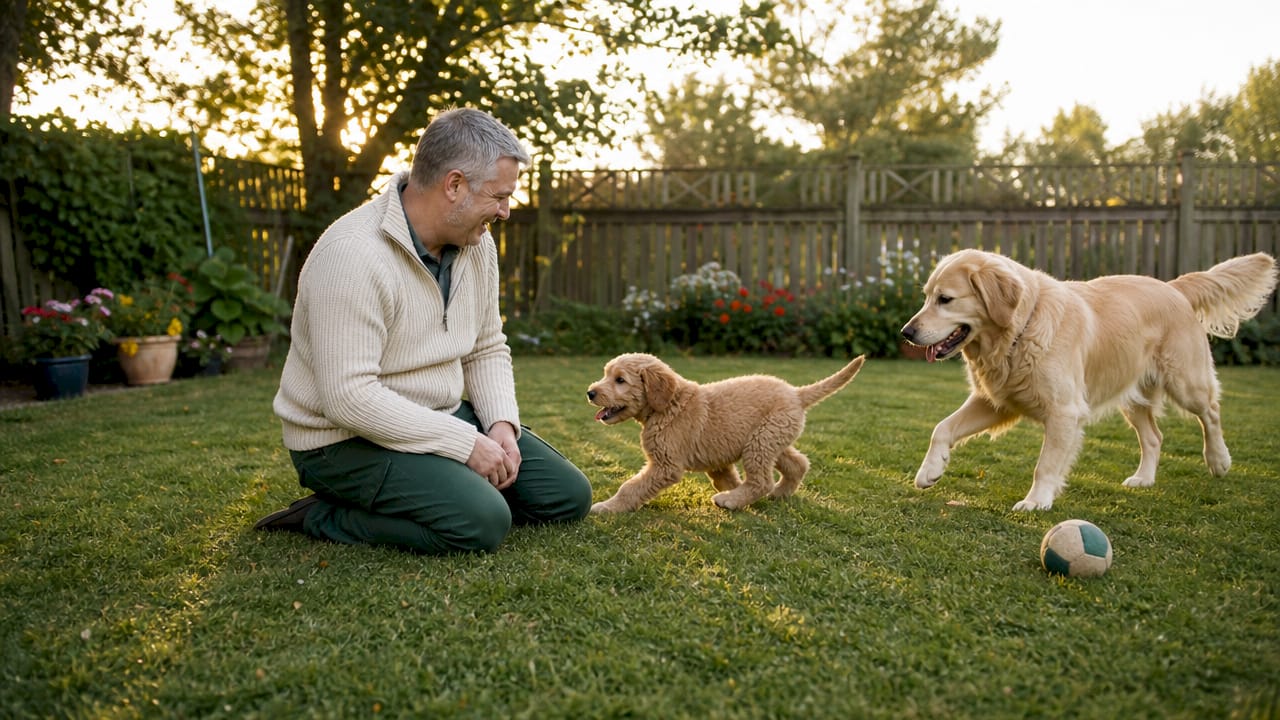
Reading canine signals accurately is the skill that separates a good socialization session from a damaging one. Puppies playing with dogs can look chaotic, but the body language tells you exactly what is happening.
Signs of a relaxed, friendly interaction:
- Loose, wiggly body with no stiffness
- Tail wagging in a wide, relaxed arc
- Playful bouncing or a play bow (front legs down, rear up)
- Taking turns chasing and being chased
- Pausing voluntarily to sniff the ground or look away
Signs of stress or fear that require intervention:
- Tail tucked under the body
- Cowering, crouching low, or trying to hide
- Stiff posture with weight shifted backward
- Yawning, lip licking, or turning the head away repeatedly
- Whale eye (showing the whites of the eyes)
When you see stress signals, calmly redirect your puppy away from the other dog. Do not scold, do not yank the leash, and do not force the interaction to continue. Allow your puppy a safe retreat space to decompress if they feel overwhelmed. A physical space with obstacles, like a crate or a corner with furniture, lets puppies self-regulate by retreating when the social pressure gets too high.
Pro Tip: If play becomes one-sided, with one dog always chasing and the other always running without taking turns, separate them gently. One-sided play teaches the chased dog that other dogs are scary, not fun.
Positive redirection works better than punishment. Call your puppy to you, reward the response, and give both dogs a short break. A rewards-based approach to managing these moments builds trust and keeps socialization moving forward.
What mistakes should you avoid when socializing your Doodle puppy?
The most common socialization mistake is allowing a puppy to greet every dog on leash, which directly causes leash reactivity later in life. Leash greetings create unnatural body language and tension because the leash prevents dogs from moving freely. A puppy that learns to lunge toward every dog on a walk becomes a reactive adult dog that is hard to manage.
Other mistakes that undermine good doodle dog interaction:
- Overwhelming the puppy with too many dogs at once. One calm, well-matched dog at a time is enough. Group settings should come later, after your puppy has solid one-on-one experience.
- Letting sessions run too long. A tired or overstimulated puppy stops learning and starts reacting. Keep early sessions under 10 minutes.
- Forcing contact with a fearful puppy. A shy Doodle that is pushed into greeting before it is ready learns that other dogs are threatening. Respect the puppy’s pace completely.
- Using dog parks for early socialization. Dog parks are unpredictable, uncontrolled, and full of dogs with unknown vaccination histories. They are not appropriate for puppies under full vaccination coverage.
- Treating socialization as constant interaction. Socialization is about habituation, teaching your puppy to observe other dogs calmly without needing to interact every time. A puppy that can sit quietly while another dog walks by has learned something more valuable than a puppy that plays with every dog it meets.
Puppies introduced to calm, well-mannered dogs from the start build the most reliable social skills. Choose your puppy’s early canine partners carefully. A single bad experience with a rough or aggressive dog during the critical window can create fear that takes months to undo.
Key Takeaways
Effective doodle puppy socialization requires starting within the 8–16 week window, using controlled environments, and prioritizing quality over quantity in every dog-to-dog interaction.
| Point | Details |
|---|---|
| Start within the critical window | The prime socialization period runs from 8 to 16 weeks. Act early and deliberately. |
| Vaccinate before contact | Wait at least 7 days after the first vaccination before any dog-to-dog exposure. |
| Use parallel walking first | Walk dogs side by side with space between them before allowing any face-to-face greeting. |
| Apply the three-second rule | Limit initial sniff greetings to three seconds to prevent over-arousal and fear responses. |
| Avoid leash greetings | Greeting every dog on leash creates leash reactivity. Reserve greetings for off-leash, controlled settings. |
What 20 years of breeding has taught me about puppy socialization
After more than two decades of raising Goldendoodles, Bernadoodles, and Cockapoos at Lakewoodranchdoodles, the lesson I keep coming back to is this: patience is the technique. Owners who rush socialization because they want a social dog often produce the most reactive ones. The puppy’s pace is not an obstacle. It is the information.
The puppies I have seen thrive long-term are not the ones who played with the most dogs in their first weeks. They are the ones whose owners chose one calm, friendly dog, kept the session short, and ended on a high note every single time. That consistency builds a puppy’s confidence in a way that no amount of forced exposure ever can.
One thing I tell every new owner at Lakewoodranchdoodles: your energy during those first meetings matters more than you think. If you are anxious about how the greeting will go, your puppy feels it through the leash and through your voice. Breathe. Move slowly. Reward the calm moments, not just the playful ones.
Quality over quantity is not just a phrase. It is the entire strategy. A Doodle puppy that has had five excellent, positive experiences with other dogs is far better prepared for life than one that has had fifty chaotic ones. Build the foundation right, and the social confidence follows naturally.
— Lakewood
Well-socialized Doodle puppies start here at Lakewoodranchdoodles
At Lakewoodranchdoodles, every puppy is raised with socialization built into daily life from the very first weeks. Located in Lindsay, Ontario, our multigenerational family program has spent over 20 years developing temperaments that are calm, trainable, and ready to connect with the world around them.
Our Goldendoodle puppies are bred specifically for the kind of steady, friendly temperament that makes socialization easier from day one. We also offer lifetime breeder support, so you are never navigating puppy milestones alone. Whether you want to visit us in person or connect virtually, we are here to walk with you through every stage of your dog’s development. Call us at 705 875 5195 or browse our available puppies to find your match.
FAQ
When can I start socializing my Doodle puppy with other dogs?
You can begin carefully controlled socialization at 7 to 8 weeks, at least 7 days after the first vaccination, using known, vaccinated dogs in private settings. The prime learning window runs from 8 to 16 weeks, so starting early matters.
How long should puppy socialization sessions be?
Keep early sessions under 10 minutes and introduce no more than 1 to 5 new experiences per week. Short, positive sessions produce better results than long, overwhelming ones.
What is the three-second rule for puppy greetings?
The three-second rule limits initial dog-to-dog sniff greetings to three seconds before calling your puppy back. Longer greetings increase the risk of over-arousal, pushy behavior, or fear responses.
Why should I avoid dog parks for early socialization?
Dog parks are unpredictable environments with unknown dogs, unknown vaccination histories, and no structure. A single negative experience during the critical window can create lasting fear. Use private, controlled settings with known dogs instead.
How do I know if my Doodle puppy is stressed during a dog interaction?
Watch for a tucked tail, stiff posture, cowering, repeated yawning, or lip licking. These are stress signals. Calmly redirect your puppy away from the other dog and give them space to decompress before trying again.