


Your dog’s coat type determines everything about how you groom them. Get it wrong and you’re looking at painful mats, skin irritation, or a coat that never quite looks right. Get it right and grooming becomes a manageable routine your dog actually tolerates.
Dog coat types are classified into seven types based on length, texture (curly vs. straight), and presence of furnishings: short, wire, wire-and-curly, long, long with furnishings, curly, and curly with furnishings. Each distinct type determines the best grooming approach for your dog.
Across all types, dog-safe shampoo is non-negotiable. Human shampoos disrupt a dog’s skin pH and cause dryness and irritation. Brushing frequency, tool choice, and bathing intervals vary widely by coat, but those two rules hold for every dog.
How to maintain each dog coat type properly
Each coat type calls for a different approach. Using the wrong brush or bathing too often can undo weeks of good care.
Curly coats
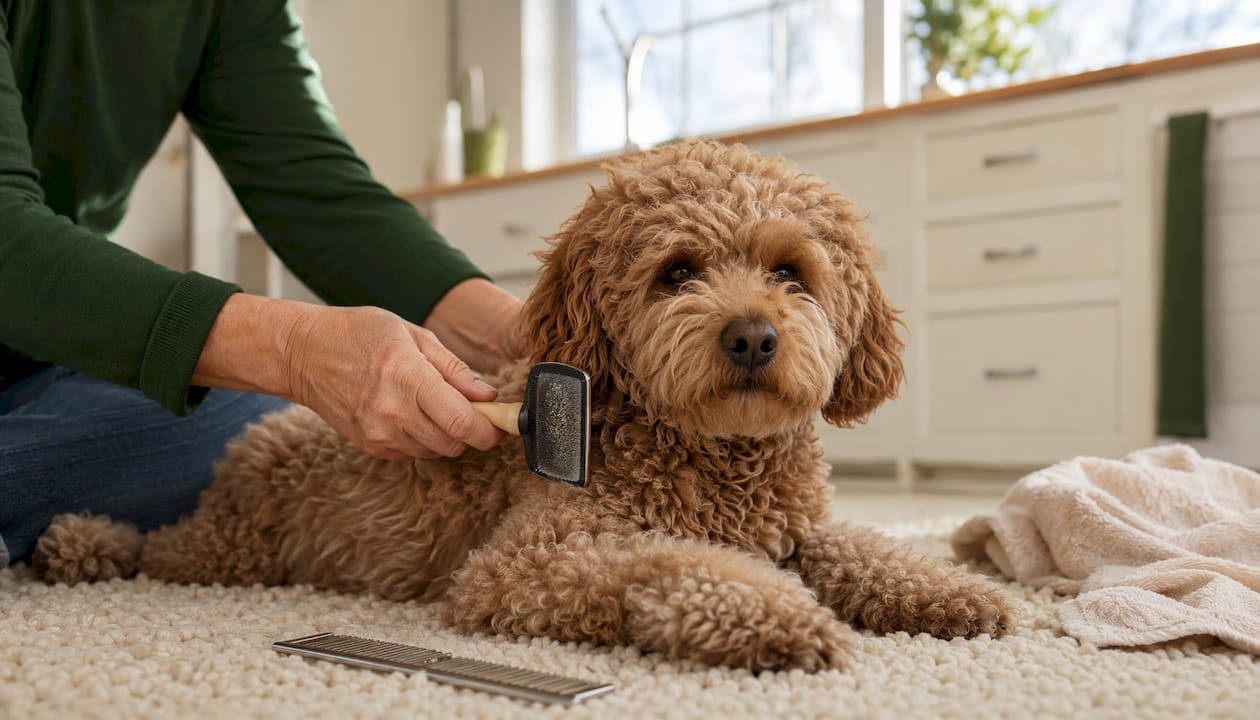
Curly coats shed minimally, but that shed hair coils back into the coat and forms mats fast. Daily brushing with a slicker brush, followed by a metal comb to check for tangles near the skin, keeps the coat clear. Brushing 2–3 times per week is the baseline for most breeds, but curly coats genuinely need daily attention. Bathe every 3–4 weeks with a moisturizing, dog-specific shampoo. Professional trims every 6–8 weeks prevent the coat from becoming unmanageable.
Wire coats
Wire coats have a distinctive rough texture that softens and loses its character if clipped too frequently. Hand-stripping, which pulls dead outer hairs from the root, preserves that texture. If hand-stripping isn’t practical, clipping works but will gradually change the coat’s feel. Brush weekly with a slicker brush or a firm bristle brush, and bathe every 4–6 weeks.
Smooth coats
Smooth coats are the easiest to maintain. A rubber curry brush or a bristle brush once a week removes loose hair and distributes skin oils. These dogs still shed, so a deshedding glove during heavy shedding seasons keeps hair off furniture. Baths every month or when visibly dirty are plenty.
Double coats
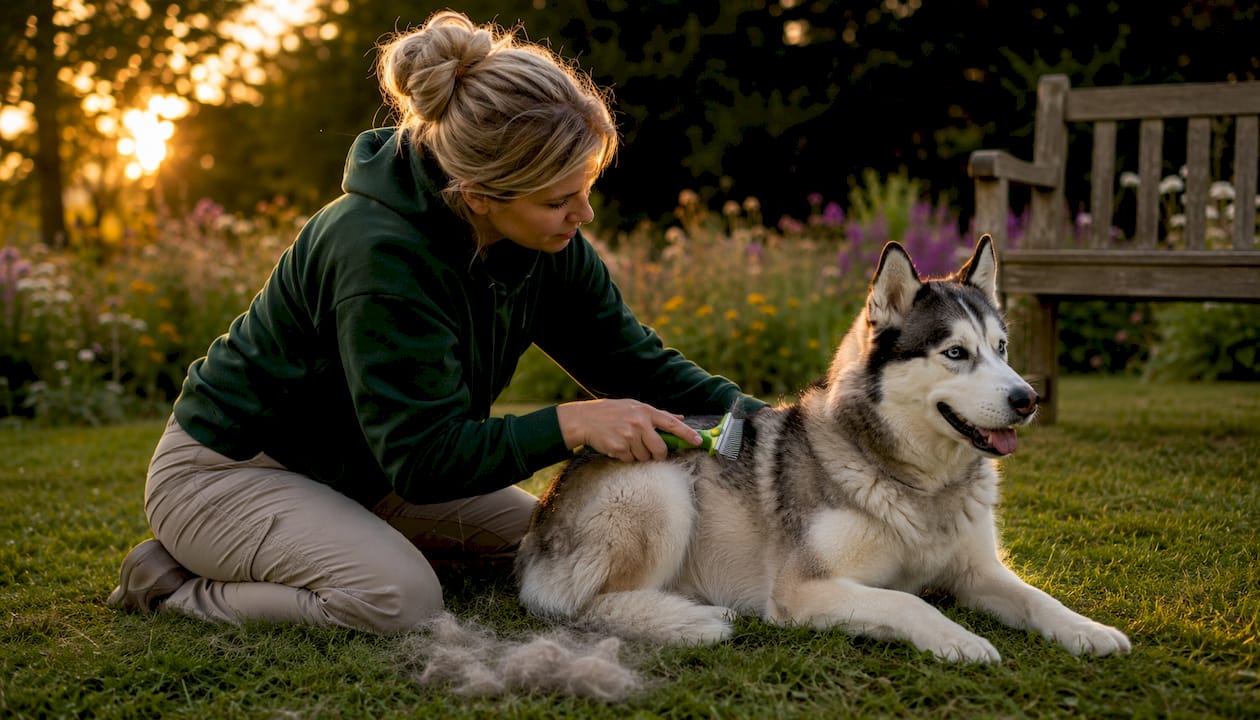
Double-coated breeds shed year-round and blow their undercoat heavily in spring and fall. An undercoat rake or deshedding tool like a Furminator reaches through the outer layer to pull loose undercoat before it mats or ends up on your couch. Brush multiple times per week, increasing frequency during shedding season. Never shave a double coat. Shaving disrupts the coat’s insulating function and can cause permanent coat damage, including a rare condition called post-clipping alopecia where regrowth is delayed or altered.
Long coats
Long coats tangle at the tips and mat at the skin. A wide-tooth comb works through the length, while a pin brush handles the finer work near the body. Brush several times per week, and check behind the ears, under the armpits, and around the collar, where mats form fastest. Bathe regularly as needed, and use a detangling conditioner to make combing easier after the bath.
| Coat Type | Best Tools | Brushing Frequency | Bath Interval |
|---|---|---|---|
| Curly | Slicker brush, metal comb | Daily | Every 3–4 weeks |
| Wire | Slicker brush, stripping comb | Weekly | Every 4–6 weeks |
| Smooth | Rubber curry brush, bristle brush | Weekly | Every 4–6 weeks |
| Double | Undercoat rake, deshedding tool | 2–3x per week (daily when shedding) | Every 4–6 weeks |
| Long | Pin brush, wide-tooth comb | 3–4x per week | Every 2–3 weeks |
Pro Tip: A complete grooming kit that includes a slicker brush, deshedding comb, and bath brush covers most coat types and saves you from buying tools piecemeal.
Seasonal adjustments matter too. During spring and fall shedding seasons, double-coated and long-coated breeds need more frequent brushing, sometimes daily, to manage the volume of loose hair. Curly-coated dogs don’t shed seasonally the same way, but their coats grow continuously, so professional grooming appointments become more critical in warmer months.
Common grooming challenges and how to avoid them
Most grooming problems come from a handful of predictable mistakes. Knowing what they are makes them easy to sidestep.
The most common challenges:
- Matting in curly and long coats: Neglecting brushing for even a week lets tangles tighten into mats that pull the skin. A recent study found that 93% of dogs with severe matting wounds had long coats, most of them designer breeds like poodle crosses.
- Shedding overload in double coats: Skipping brushing during shedding season lets loose undercoat compact into dense mats close to the skin.
- Skin irritation from the wrong shampoo: Human shampoos strip the coat’s natural oils and throw off skin pH. Always use a dog-specific shampoo formulated for your dog’s coat type.
- Superficial brushing: Using the wrong brush, or only brushing the top layer, leaves mats forming undetected near the skin. A slicker brush on a curly coat needs to reach down to the skin, not just skim the surface.
- Bathing before brushing: Water tightens existing tangles, turning a manageable knot into a hard, painful mat.
Pro Tip: Always brush before bathing. Work through any tangles dry, then bathe. Trying to detangle a wet mat is harder on the dog and harder on you.
Grooming stress is a real barrier for many owners. Dogs that resist brushing or baths often had negative early experiences, or none at all. Starting with short, calm sessions and rewarding your dog with treats throughout builds tolerance over time. The goal is a dog that stands still, not one that dreads the brush.
What groomers and researchers say about best dog coat care
Regular brushing matters more than frequent bathing. Brushing distributes the coat’s natural oils, removes debris, and catches mats before they become painful. Bathing too often, especially with the wrong shampoo, strips those oils and leaves the skin dry.
Groomers consistently emphasize one rule above all others: brush before you bathe, rinse longer than you think you need to, and match your tool to the coat. Getting any one of those wrong adds time, discomfort, and cost to every session.
Rinsing is where many home groomers cut corners. Shampoo left in the coat causes persistent itching and skin irritation. Groomers recommend rinsing twice as long as feels necessary, paying close attention to dense areas like the armpits, groin, and tail base.
Nutrition shapes the coat from the inside. A diet rich in protein and omega-3 fatty acids produces a shinier, more resilient coat than any topical treatment can. If your dog’s coat looks dull or brittle despite regular grooming, food quality is the first place to look.
Expert-backed do’s and don’ts:
- Do use the line brushing technique: part the coat horizontally and work section by section from the skin outward to catch mats before they tighten.
- Do introduce grooming early with positive reinforcement so your dog builds a calm association with brushes and baths.
- Do rinse shampoo thoroughly, focusing on dense coat areas.
- Don’t shave a double coat. The insulating layer protects against both heat and cold.
- Don’t brush a wet coat if mats are present. Dry detangling first.
- Don’t skip professional grooming for curly or long coats. Home brushing maintains the coat between appointments, but it doesn’t replace a professional trim.
Signs that warrant a vet visit rather than a grooming session include bald patches, red or flaky skin, a sudden change in coat texture, or excessive scratching that doesn’t improve after a bath with proper shampoo. These can signal allergies, hormonal issues, or skin infections that grooming alone won’t fix.
If you’re bringing home a Goldendoodle puppy or another curly or furnished coat breed from Lakewoodranchdoodles, grooming starts on day one. At Lakewoodranchdoodles, every puppy is raised with early handling and positive touch so that brushing and bathing feel familiar before they ever leave the ranch. Browse available puppies and reach out to talk coat care, grooming schedules, and what to expect from your specific breed.
Key Takeaways
Matching your grooming routine to your dog’s specific coat type is the single most effective way to prevent mats, skin problems, and unnecessary stress for both of you.
| Point | Details |
|---|---|
| Coat type drives every decision | Brushing frequency, tool choice, and bath intervals all depend on whether your dog has a curly, wire, smooth, double, or long coat. |
| Brush before every bath | Water can tighten mats; always detangle dry before wetting the coat. |
| Severe matting wounds occur predominantly in dogs with long coats, especially poodle crosses, when grooming is neglected. | |
| Nutrition affects coat quality | A diet rich in protein and omega-3 fatty acids produces a healthier coat than topical treatments alone. |
| Never shave a double coat | Shaving disrupts insulation and can cause permanent coat damage, including delayed regrowth. |