


A puppy health guarantee is a breeder’s contractual promise to cover specific health conditions for defined time periods, with remedies like refunds, replacements, or vet cost reimbursement if problems arise. For Canadian buyers, understanding the distinct types of puppy health guarantees before signing anything is the difference between real protection and a vague promise on paper. The industry term for these documents is a “puppy health warranty,” and knowing how each type works gives you the leverage to ask the right questions and choose the right breeder.
1. What are the main types of puppy health guarantees?
Comprehensive puppy health guarantees have two distinct periods: a short-term window of 48–72 hours for infectious disease detection and a long-term window of 1–2 years for genetic conditions. Some breeders extend genetic coverage up to 3 years. That two-tier structure is the foundation of every serious dog health warranty you will encounter.
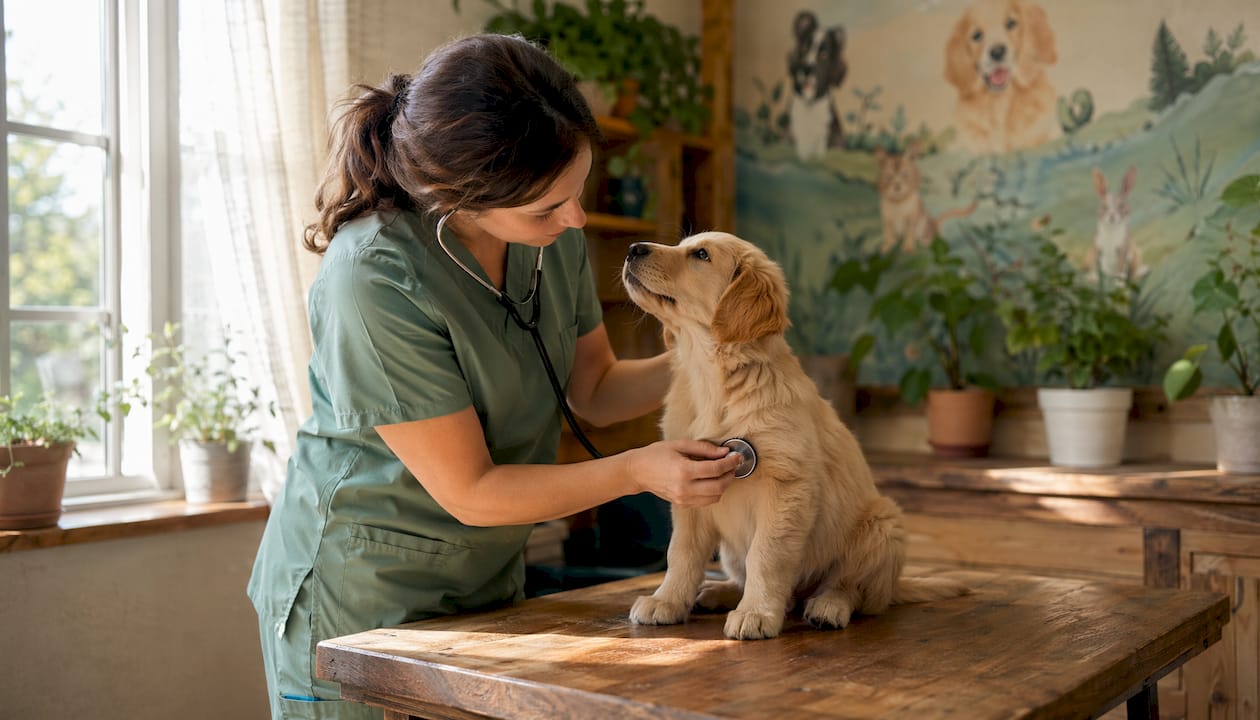
Short-term coverage addresses communicable diseases your puppy may have been exposed to before leaving the breeder. The 48–72 hour window requires you to see a licensed veterinarian almost immediately after pickup. Conditions like parvovirus, kennel cough, and distemper fall into this category.
Long-term genetic coverage addresses hereditary conditions that take months or years to appear. Common inclusions are hip dysplasia, elbow dysplasia, and congenital heart defects. These are the conditions that cost the most to treat and matter most to buyers making a significant investment.
- Short-term window: 48–72 hours, infectious and communicable diseases
- Long-term window: 1–2 years (sometimes up to 3), hereditary and genetic conditions
- Covered conditions typically include: hip/elbow dysplasia, congenital heart defects, inherited eye disorders
- All claims require a licensed vet exam and written documentation within the defined window
Pro Tip: Book your vet appointment for the day after pickup, not the day after that. Missing the 48–72 hour window voids most short-term claims entirely.
2. What remedies do health guarantees typically offer?
Standard breeder remedies include a full refund upon return of the puppy, a replacement puppy from a future litter, or reimbursement of veterinary costs up to a capped dollar amount. Remedy type and reimbursement caps vary by contract and by province. Knowing which remedy applies to which situation protects you from surprises.
A full refund requires returning the puppy, which many owners are emotionally unwilling to do after bonding. A replacement puppy is the most common remedy offered for long-term genetic conditions. Vet cost reimbursement is the most buyer-friendly option but is almost always capped, often at the original purchase price or a fixed dollar amount.
- Full refund: Requires returning the puppy; typically applies to short-term illness claims
- Replacement puppy: Most common for genetic conditions; may require a wait for the next litter
- Vet cost reimbursement: Capped amount; requires original receipts and vet certification
- Partial reimbursement: Some contracts offer a sliding scale based on the puppy’s age at diagnosis
Pro Tip: Ask the breeder in writing what the reimbursement cap is before you sign. A cap set at the purchase price sounds fair until you realize a hip dysplasia surgery can cost three times that amount.
3. How do legal protections in Canada interact with puppy health guarantees?
Puppy lemon laws provide statutory buyer protections, often requiring vet exams within 7–14 days for infectious diseases and up to 1 year for hereditary defects. Roughly 22 US states have formal puppy lemon laws. Canadian statutes are more limited but growing, and provincial consumer protection legislation increasingly fills the gap.
The key difference between a statutory right and a contractual guarantee is that statutory rights exist whether or not the breeder includes them in a contract. In Ontario, for example, the Consumer Protection Act gives buyers recourse against misrepresentation, which can apply when a breeder makes health claims they cannot support. Quebec’s consumer protection framework is similarly broad.
| Protection type | Time window | Covered conditions | Buyer action required |
|---|---|---|---|
| Short-term statutory | 7–14 days | Infectious diseases | Vet exam plus written notice to seller |
| Long-term statutory | Up to 1 year | Hereditary defects | Vet certification of unfitness |
| Breeder contract (short-term) | 48–72 hours | Communicable diseases | Vet exam within window |
| Breeder contract (long-term) | 1–2 years (up to 3) | Genetic conditions | Documentation and notification |
An initial vet exam must produce a written certification of unfitness for any claim to proceed under either a statute or a contract. Notification to the seller must follow within a few days of receiving that vet report. Missing either step typically ends the claim.
4. How do health testing and guarantees complement each other?
Health testing and health guarantees serve fundamentally different purposes. Testing is proactive and reduces the probability of inherited disease. Guarantees are reactive contracts that define what happens after a problem appears. Confusing the two is one of the most common mistakes Canadian puppy buyers make.
A health-tested puppy comes from parents who have passed OFA clearances for hips and elbows, CAER eye exams, and relevant DNA panels. OFA results are publicly verifiable through the OFA.org registry. That transparency is what separates a genuine health-tested puppy from a marketing claim. Understanding what dam health means for the offspring is the first step in evaluating any breeder’s program.
- OFA clearances: Hip and elbow evaluations graded by the Orthopedic Foundation for Animals
- CAER eye exams: Canine Eye Registry Foundation evaluations for inherited eye disease
- DNA panels: Breed-specific genetic tests for conditions like degenerative myelopathy or progressive retinal atrophy
- Cardiac evaluations: Auscultation or echocardiogram clearances for heart conditions
Relying solely on a guarantee without verifying the parents’ health testing records is a real risk. Guarantees do not prevent conditions. They only define the remedy after a condition appears. A breeder with strong health testing records and a clear guarantee is offering you two layers of protection, not one.
5. What makes a puppy health guarantee actually useful?
A useful health guarantee explicitly defines covered conditions, time windows, veterinary requirements, remedies, and warranty-voiding clauses. Vague language in guarantees weakens buyer protection significantly. A contract that says “we guarantee your puppy’s health” without specifics is not a guarantee at all.
Warranty-voiding clauses deserve special attention. Most contracts void the guarantee if you feed a non-approved diet, skip recommended vaccinations, or fail to complete the initial vet exam on time. Some breeders void coverage if you use a different veterinarian than the one they recommend. Read every clause before signing.
The strongest guarantees name specific conditions, state exact time windows in days or months, and identify the remedy for each covered scenario. Weak guarantees use phrases like “at our discretion” or “subject to review.” Those phrases shift all decision-making power back to the breeder.
6. Which type of guarantee fits your situation?
Buyers should ask breeders specifically about coverage, duration, required documentation, and remedies before purchase. The right answer is a clear contract with named remedies. A vague, non-binding promise is a red flag regardless of how confident the breeder sounds.
Your situation shapes which guarantee type matters most to you. A buyer purchasing a puppy for service work or competitive sports needs the most comprehensive long-term genetic coverage available. A buyer on a tighter budget still needs the short-term infectious disease window but may accept a replacement-only remedy for genetic conditions.
- High-investment buyers: Prioritize long-term genetic coverage with vet cost reimbursement, not just replacement
- First-time owners: Look for clear language, defined time windows, and a breeder who explains the contract verbally
- Service dog buyers: Require the broadest possible coverage for neurological and musculoskeletal conditions
- Budget-conscious buyers: Confirm the short-term window is at least 48–72 hours and that the remedy is in writing
Ask these four questions before signing any puppy health warranty: What conditions are covered? What is the exact time window for each? What documentation do I need to file a claim? What is the specific remedy for each covered condition?
Key Takeaways
The strongest puppy health guarantees combine short-term infectious disease coverage with long-term genetic protection, defined remedies, and verifiable health testing records from both parents.
| Point | Details |
|---|---|
| Two-tier guarantee structure | Short-term covers 48–72 hours for illness; long-term covers 1–2 years for genetic conditions. |
| Remedies vary by contract | Refund, replacement, or capped vet reimbursement are the three standard options. |
| Legal protections exist independently | Canadian provincial statutes provide buyer rights separate from any breeder contract. |
| Health testing is not a guarantee | OFA, CAER, and DNA panels reduce risk proactively; guarantees only define the remedy after a problem occurs. |
| Vague language is a red flag | A useful guarantee names specific conditions, windows, and remedies in writing. |
What I’ve learned after 20 years of breeding
Most buyers focus on the length of a guarantee. I focus on the clarity. A 3-year genetic guarantee written in vague language protects no one. A 1-year guarantee that names hip dysplasia, elbow dysplasia, and congenital heart defects by condition, states the exact remedy, and lists the documentation required is worth ten times more.
The other thing I’ve seen consistently: buyers who skip verifying health testing records and rely entirely on the guarantee are the ones who end up frustrated. A guarantee is a safety net, not a substitute for a well-bred puppy. When you combine parents with verified OFA clearances and CAER eye exams with a clear written contract, you are buying from a program built on actual accountability.
The question I encourage every buyer to ask is not “do you have a health guarantee?” Every breeder says yes. The real question is: “Can you show me the contract right now, and can you walk me through exactly what happens if my puppy is diagnosed with hip dysplasia at 18 months?” The answer to that question tells you everything.
— Lakewood
Lakewoodranchdoodles’ approach to puppy health protection
At Lakewoodranchdoodles, our health guarantee is a written contract, not a handshake. Located in Lindsay, Ontario, we have spent over 20 years building a breeding program where health testing and contractual protection work together. Our Goldendoodles, Bernadoodles, and Cockapoos come from parents with verified health clearances, and every puppy leaves with a clear guarantee covering both short-term and long-term conditions.
You can read the full details of our puppy health guarantee before you ever commit to a puppy. Our breeding program page walks you through our health testing standards, our parent clearances, and the philosophy behind every litter we produce. Call us at 705 875 5195 or book a virtual visit to ask your questions directly.
FAQ
What is a puppy health guarantee?
A puppy health guarantee is a written contract from a breeder that covers specific health conditions for defined time periods and states the remedy if a covered condition is diagnosed. It is the industry-standard term for what is also called a dog health warranty or puppy warranty.
How long does a puppy health guarantee typically last?
Most guarantees cover infectious diseases for 48–72 hours and genetic or hereditary conditions for 1–2 years, with some breeders extending genetic coverage up to 3 years.
What is a health-tested puppy?
A health-tested puppy comes from parents who have passed standardized evaluations including OFA hip and elbow clearances, CAER eye exams, and DNA panels for breed-specific genetic conditions. Results are publicly verifiable through registries like OFA.org.
Do Canadian puppy buyers have legal protections beyond the breeder’s contract?
Canadian provincial consumer protection laws provide statutory buyer rights independent of any breeder contract, including recourse for misrepresentation. Statutory windows for vet exams typically run 7–14 days for infectious disease and up to 1 year for hereditary defects.
What voids a puppy health guarantee?
Most guarantees are voided by missed vet exams within the required window, failure to notify the seller promptly after a diagnosis, unapproved diet changes, or skipped vaccinations. Always read the warranty-voiding clauses before signing.