


Puppy cold weather care means keeping a young dog warm, dry, and protected from the elements while matching every outdoor outing to the puppy’s age, vaccination status, breed, and the actual temperature outside. Three actions matter most right now: bring the puppy inside immediately if it starts shivering or lifting its paws; use a well-fitting, waterproof coat and booties for any cold outdoor trip; and keep the puppy away from public dog areas until the full vaccination series is complete at around four months.
Temperature matters more than most new owners expect:
- Above 45°F: Most puppies tolerate brief outdoor time, though small and short-haired breeds still need a coat.
- 32–45°F: Limit outings to 10–15 minutes; watch for early cold-stress signals.
- 20–32°F: Dangerous for puppies. Potty trips only, fully geared up, with you present the entire time and keep outings under five minutes.
- Below 20°F: Cold stress risk is high for nearly all dogs. Avoid outdoor time unless absolutely necessary; limit potty breaks to under five minutes.
Table of Contents
- Why puppies feel the cold faster than adult dogs
- How cold is too cold? Temperature thresholds for puppies
- Recognizing cold stress, hypothermia, and frostbite
- Practical outdoor protection: what to use and how
- Grooming and paw care during winter
- When can your puppy safely go outside and be around other dogs?
- How to keep your puppy active and mentally sharp indoors
- How to choose and fit winter gear correctly
- Key Takeaways
- What 20 years of raising puppies through Canadian winters taught us
- Useful sources and further reading
Why puppies feel the cold faster than adult dogs
Puppies are not just small adults. Their thermoregulation systems are genuinely immature, which means their bodies struggle to generate and hold heat the way an adult dog’s body does. Add a lower percentage of body fat and a higher surface-area-to-volume ratio, and you get an animal that loses heat rapidly in cold air. Cornell University’s veterinary researchers point to these three physiologic factors as the core reasons puppies are at elevated risk of hypothermia and frostbite.
The AVMA identifies puppies alongside seniors and small or short-haired breeds as the highest-risk groups in cold weather. Breed and coat type compound the risk: a Cockapoo with a dense, curly coat handles cold better than a short-coated dog of the same age and weight, but neither one should be treated like a fully grown adult.
Behavior adds another layer of risk. Puppies don’t always signal discomfort clearly. A puppy that stops moving, sits down mid-walk, or starts lifting one paw at a time is telling you it’s cold, but a frightened or overstimulated puppy may freeze for other reasons. Owners who wait for obvious shivering before acting are often waiting too long.
How cold is too cold? Temperature thresholds for puppies
| Temperature | Risk Level | Recommended Exposure |
|---|---|---|
| Above 45°F | Low–Moderate | Normal short outings; monitor small/short-haired breeds |
| 32–45°F | Moderate | 10–15 minutes max; coat required for most puppies |
| 20–32°F | High | Potty trips only (under 5 min); coat + booties required |
| Below 20°F | Very High | Avoid outdoor time; skip unless urgent potty needs (under 5 min) |
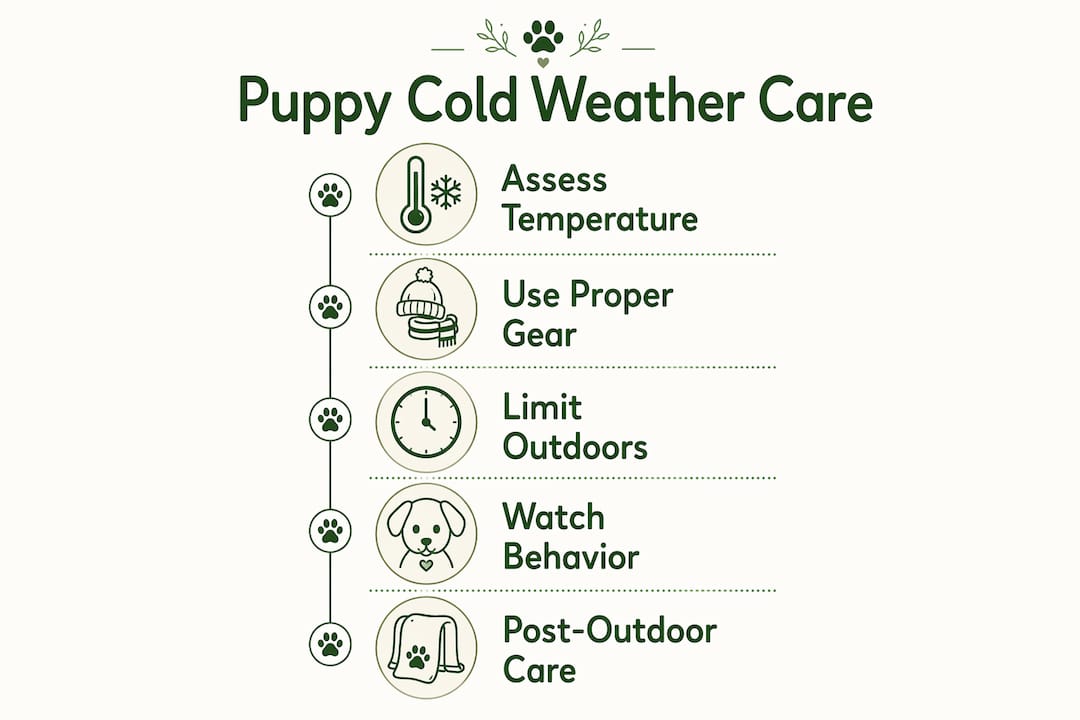
Wind and moisture change everything. A 35°F day with rain and wind can feel significantly colder to a puppy than a calm, dry 28°F morning. Wind chill and wetness dramatically increase heat loss, so always factor conditions, not just the thermometer reading.
Age-based rules are non-negotiable:
- Under 8 weeks: Stay indoors regardless of temperature. Period.
- 8–16 weeks: Short, controlled outings in a private yard on mild days. No public dog parks, sidewalks with heavy foot traffic, or areas where unvaccinated dogs may have been.
- 16–17+ weeks (fully vaccinated): Public areas become appropriate, but cold-weather protection still applies.
Pro Tip: On windy or wet days, cut your planned outdoor time in half before you even step outside. The forecast temperature is rarely the whole story.
Recognizing cold stress, hypothermia, and frostbite
Catching cold stress early is the difference between a quick fix and a vet emergency. Watch for these signs during and after any outdoor outing:
Early cold stress:
- Shivering or trembling
- Lifting paws off the ground repeatedly
- Slowing down, stopping, or refusing to walk
- Whining or anxious behavior
- Tucked tail, hunched posture
Hypothermia warning signs:
- Muscle stiffness or weakness
- Lethargy or confusion
- Slowed, shallow breathing
- Pale or bluish gums
Frostbite indicators (ears, paw pads, tail tip):
- Skin that looks pale, gray, or bluish
- Cold, hard texture to the touch
- Swelling or blistering that appears hours later
Frostbite can be deceptive. Damage may not be fully visible right after exposure and can worsen over the following days. Check ears, paw pads, and the tail tip carefully after any cold outing, and keep monitoring for changes in color, texture, or swelling.
First-aid steps for hypothermia:
- Move the puppy to a warm indoor space immediately.
- Wrap in dry towels or blankets. Do not use electric heating pads directly on skin.
- Offer warm (not hot) water if the puppy is alert and able to swallow.
- Call your vet or an emergency animal clinic right away.
- Keep the puppy calm and warm during transport.
First-aid steps for suspected frostbite:
- Bring the puppy inside and keep it warm.
- Do not rub the affected area. Rubbing causes tissue damage.
- Do not apply direct heat (no hair dryers, no heating pads).
- Contact your vet for evaluation, even if the area looks minor.
When to go straight to emergency care: If the puppy is unresponsive, breathing very slowly, or has gums that are pale or blue, this is an emergency. Tell the vet how long the puppy was exposed, what the temperature and conditions were, and any prior health issues.
Check healthy puppy behaviors to understand what normal looks like, so cold-stress changes stand out clearly.
Practical outdoor protection: what to use and how
The right gear makes a real difference. A waterproof coat with a fleece lining protects the belly and core, which is where puppies lose the most heat. Belly coverage is not optional on cold days. Booties protect paw pads from ice, snow, and chemical deicers that can cause burns and cracking.
Outdoor gear checklist:
- Waterproof, fleece-lined coat with belly coverage
- Booties or paw wax for ice and salt protection
- Reflective leash and collar for low-light winter walks
- Dry towel at the door for immediate post-walk drying
Keep outdoor trips purposeful. Use a short leash so the puppy stays close and you can read its body language. For potty trips below 32°F, walk to the spot and come straight back. Save play for indoors or for days when conditions are genuinely mild.
Getting a puppy comfortable with gear before winter arrives saves a lot of frustration. Start with the coat indoors for a few minutes at a time, reward calmly, and build up. Booties take longer. Let the puppy sniff them first, then slip one on, reward, remove. Repeat over several sessions before expecting the puppy to walk in all four.
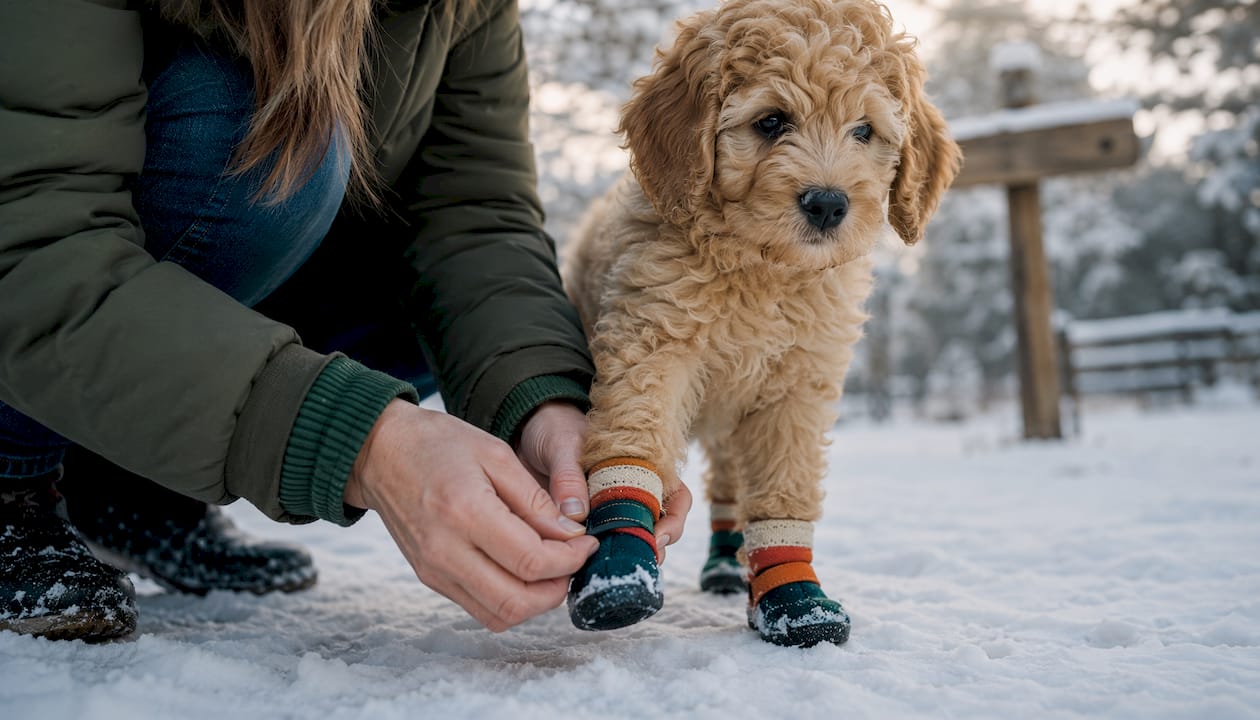
Pro Tip: Put booties on right before you walk out the door, not five minutes earlier. A puppy left standing in booties inside will spend that time trying to remove them.
Grooming and paw care during winter
The goal in winter is not a shorter coat. It’s a strategic one. Shaving a puppy’s coat removes the natural insulation that keeps it warm, which is the opposite of what you need. Instead, trim the hair around the hind end and between the paw pads to prevent snow and ice from clumping into painful balls. That targeted trim preserves warmth while eliminating one of the most common winter discomforts.
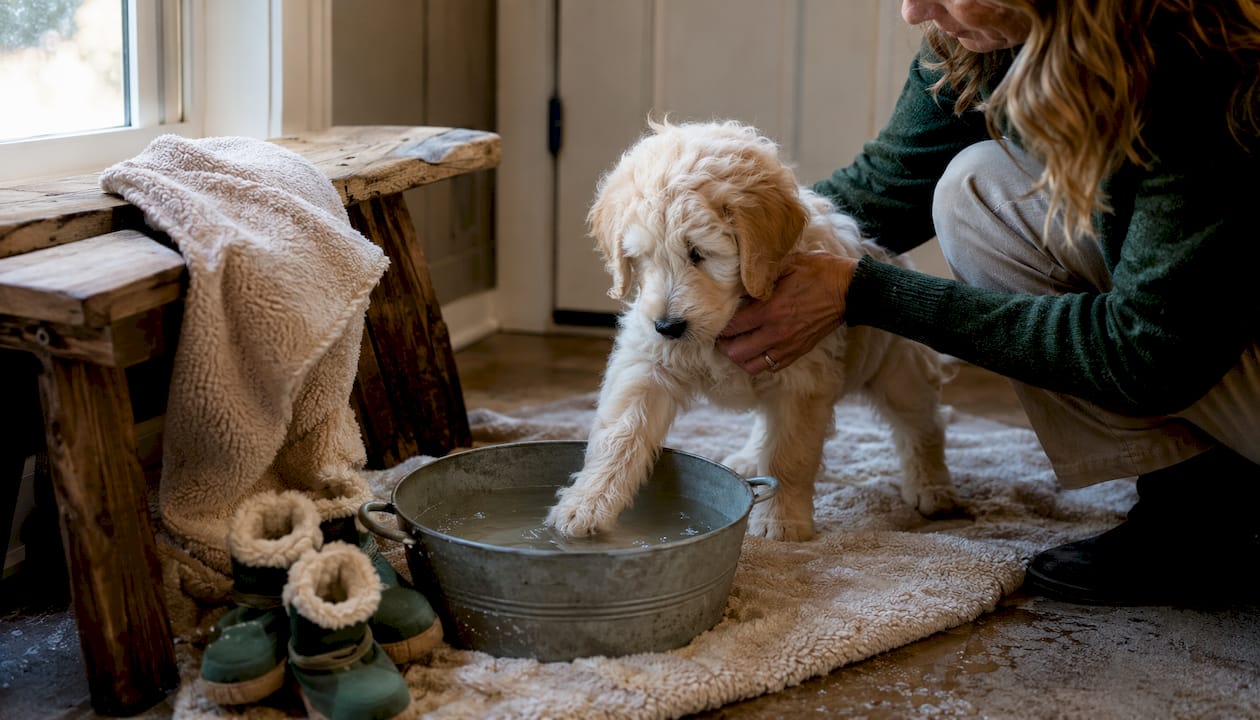
After every walk, check the paw pads. Salt and chemical deicers cling to the pads and between the toes and can cause burns, cracking, and toxicity if licked. Rinse paws with warm water, pat dry, and inspect for redness or cuts. If pads look dry or cracked, a vet-approved paw balm applied before and after walks helps.
On ice-melt products: Many common deicers contain sodium chloride, potassium chloride, or calcium chloride, all of which irritate paw pads and are toxic if ingested. Look for products labeled pet-safe, which typically use urea or magnesium chloride at lower concentrations. Even then, rinse paws after every outing.
Pro Tip: Keep a small tub of warm water and a towel right at your entry door. Dipping paws before drying takes ten seconds and removes most of the salt and chemical residue before it causes damage.
For coat-type guidance specific to your puppy’s breed, the dog coat maintenance guide at Lakewoodranchdoodles covers all five coat types and what each needs through the seasons.
When can your puppy safely go outside and be around other dogs?
The vaccination timeline is the single most important factor in deciding where your puppy can go. The AVMA’s guidance on canine parvovirus is clear: puppies should stay away from public, high-traffic dog areas until they are fully vaccinated, which typically happens around 16–17 weeks of age.
Vaccination and outdoor access milestones:
- Under 8 weeks: Indoors only. No outdoor exposure.
- 8–12 weeks: First vaccinations begin. Private yard access on mild days is appropriate. No public areas.
- 12–16 weeks: Booster series continues. Controlled yard time fine; still no dog parks, pet stores, or sidewalks with heavy dog traffic.
- 16–17 weeks (series complete): Public areas become appropriate with normal precautions.
Safe socialization before full vaccination is possible. Invite known, fully vaccinated dogs to your private yard. Carry the puppy to quiet outdoor spots where unknown dogs haven’t been. Use in-home or porch-based socialization with trusted visitors. These approaches let the critical socialization window (8–16 weeks) stay productive without the disease risk of public spaces.
Pro Tip: The socialization window and the vaccination window overlap almost perfectly. Don’t sacrifice one for the other. Carry the puppy, use your yard, and invite vaccinated dogs over. You can do both.
For a deeper look at safe socialization strategies, the puppy socialization guide at Lakewoodranchdoodles walks through the full approach.
Statistic callout: The AVMA places puppies in the highest-risk category for cold-weather illness alongside seniors and small or short-haired breeds, making vaccination timing and cold-weather protection doubly important during the first four months of life.
How to keep your puppy active and mentally sharp indoors
Winter doesn’t pause a puppy’s developmental needs. When it’s too cold to walk, the answer is not to do nothing. Indoor enrichment replaces the physical and mental stimulation of outdoor walks without any cold-weather risk.
Enrichment options that actually work:
- Food puzzles and snuffle mats (start easy, increase difficulty as the puppy figures them out)
- Scent games: hide treats around the house and let the puppy find them
- Short training sessions (5–10 minutes, two or three times a day) covering sit, stay, recall, and name recognition
- Tug, fetch down a hallway, or stair climbing for physical output
- Rotating toys so familiar ones feel new again
For higher-energy puppies, the indoor mental stimulation guide at Bowlful offers structured activity progressions that go well beyond basic puzzle feeders.
Indoor environment basics:
- Keep bedding off cold floors. A raised bed or thick mat near (not directly on) a heat source works well.
- Maintain fresh water at all times. Puppies drink less when cold, which can lead to dehydration.
- If the puppy spends time in a garage or porch area, check that water doesn’t freeze and that drafts are blocked.
On nutrition: puppies that spend more time outdoors in cold weather may burn slightly more calories staying warm. If you notice weight loss or reduced energy, talk to your vet before adjusting feeding amounts. A warm, low-sodium broth added to meals is something many breeders use in winter, but confirm with your vet first.
How to choose and fit winter gear correctly
Fit matters more than brand. A coat that’s too tight restricts movement and causes chafing; one that’s too loose lets cold air funnel straight through and offers almost no protection.
How to measure for a coat:
- Length: Measure from the base of the neck to the base of the tail.
- Girth: Measure the widest point of the chest, just behind the front legs.
- Neck: Measure loosely around the neck where a collar sits.
What to look for in materials:
- Waterproof or water-resistant outer shell
- Fleece or insulated inner lining
- Adjustable fasteners at the neck and belly
- No-chafe seams at the armpits and chest
Fit check points: You should be able to slide two fingers under any strap. The coat should cover the belly fully. The neck opening should not press on the throat or slip over the head.
Pro Tip: Buy the coat before winter, not during it. Measure the puppy, then size up by one if the puppy is still growing fast. A coat that fits in November may be snug by January.
Desensitizing to gear: a simple routine:
- Place the coat on the floor and let the puppy sniff it for a day.
- Drape it over the puppy’s back without fastening. Reward and remove.
- Fasten loosely for 30 seconds indoors. Reward, remove.
- Extend wear time gradually over several sessions before the first outdoor use.
- Repeat the same process for booties, one paw at a time.
For age-appropriate exercise guidance that pairs with gear training, the puppy exercise age guide at Lakewoodranchdoodles is worth bookmarking.
Key Takeaways
Puppy cold weather care means matching every outdoor outing to age, vaccination status, temperature, and breed while using protective gear, indoor enrichment, and paw care to keep your puppy safe through winter.
| Point | Details |
|---|---|
| Keep indoors under 8 weeks | No outdoor exposure regardless of temperature until 8 weeks of age. |
| Use temperature thresholds | 20–32°F means potty trips only for under five minutes; below 20°F, skip outdoor time entirely unless urgent potty needs, which should be under five minutes. |
| Watch for cold-stress signals | Shivering, paw-lifting, and slowing down are signs to go inside immediately. |
| Gear up properly | A waterproof, fleece-lined coat with belly coverage and booties are functional necessities, not accessories. |
| Delay public areas until vaccinated | Keep puppies away from public dog areas until the full vaccination series is complete at 16–17 weeks. |
What 20 years of raising puppies through Canadian winters taught us
Most new owners focus on temperature and forget about moisture. A wet puppy at 40°F is in more danger than a dry puppy at 28°F with a good coat. That’s the thing we see most often: owners check the thermometer, see it’s above freezing, and head out without a second thought. Then the puppy comes back soaked from snow, and nobody dries it off properly.
The other thing worth saying plainly: indoor enrichment is not a consolation prize for a bad weather day. Puppies that get consistent scent games, short training sessions, and food puzzles through winter often come out of the season better socialized and more focused than puppies who only get outdoor walks. The mental work is real work.
At Lakewoodranchdoodles, we’ve been raising Goldendoodles, Bernedoodles, and Cockapoos through cold seasons for over 20 years. The puppies that transition best to new homes in winter are the ones whose owners prepared before the cold hit: gear fitted and practiced, indoor routines established, paw care built into the daily habit. If you’re bringing home a puppy this winter and want breeder-backed support from day one, we’re here for the whole journey.
If you’re considering a puppy and want to see what’s currently available, browse our available puppies or reach out directly. We do in-person visits by appointment and virtual visits anytime.
Useful sources and further reading
The guidance in this article draws on the following authoritative organizations. Each covers a specific aspect of puppy winter care.
| Source | What It Covers |
|---|---|
| AVMA — Cold-Weather Animal Safety | Highest-risk groups, gear fit guidance, general cold-weather protocols |
| AVMA — Canine Parvovirus | Vaccination timing, public-area rules, outdoor access milestones |
| Cornell University CVM — Winter Safety Tips | Physiologic cold susceptibility, grooming/trimming guidance |
| American Humane — Pets in Winter | Indoor enrichment, behavioral cold-stress signals, general winter pet safety |
| ASPCA — Cold Weather Safety Tips | Frostbite and hypothermia signs, paw care, outdoor safety |
| PetMD — How to Keep Dogs Warm in Winter | Temperature thresholds (45°F, 32°F, 20°F) and breed-specific cold tolerance |
| Grand Ave. Pet Hospital — Puppies Outside in Winter | Wind/wetness effects on safe exposure time, age-based outdoor rules |
For breeder-specific guidance, Lakewoodranchdoodles offers resources on caring for your dog, puppy nutrition, coat maintenance, and training support. This article is general information and not a substitute for advice from your own veterinarian, who knows your puppy’s specific health history and needs.